Stablecoins on Lightning. BTC upside, USD stability.
Bitcoin gives you sovereignty and long-term upside. Stablecoins give you a stable unit of account for rent, payroll and day-to-day spending. Lightning Pay gives you both, in one app, behind one seed phrase.
Why stablecoins live next to Bitcoin
Bitcoin is the savings asset. Stablecoins are the spending asset. Holding both in one non-custodial wallet means you don't have to choose.
BTC for savings
Stables for spending
Lightning makes it usable
Two giants, one self-custody wallet
A stablecoin wallet stores tokens whose price is pegged 1:1 to a currency — almost always the US dollar. The two giants are USDC (issued by Circle, fully regulated in the US, monthly attested reserves of cash and short-term Treasuries) and USDT (issued by Tether, the most liquid stablecoin globally, broader exchange support but a more opaque reserve history).
Lightning Pay supports both, on the Lightning Network, in the same app and behind the same 12-word seed as your Bitcoin. The traditional way to hold a stablecoin was on Ethereum or Tron: $2–20 per transfer, gas-price roulette. On Lightning it costs a fraction of a cent and stays non-custodial throughout.
USDC, USDT — or both?
The regulated dollar
The global liquidity dollar
Lock in dollars without leaving self-custody
Bitcoin's long-term appreciation comes with short-term volatility — 20–40% drawdowns are routine. The old playbook was: send BTC to an exchange, sell to fiat, wire to your bank. Each step adds custodial risk, settlement delay, and a taxable event you may not have wanted.
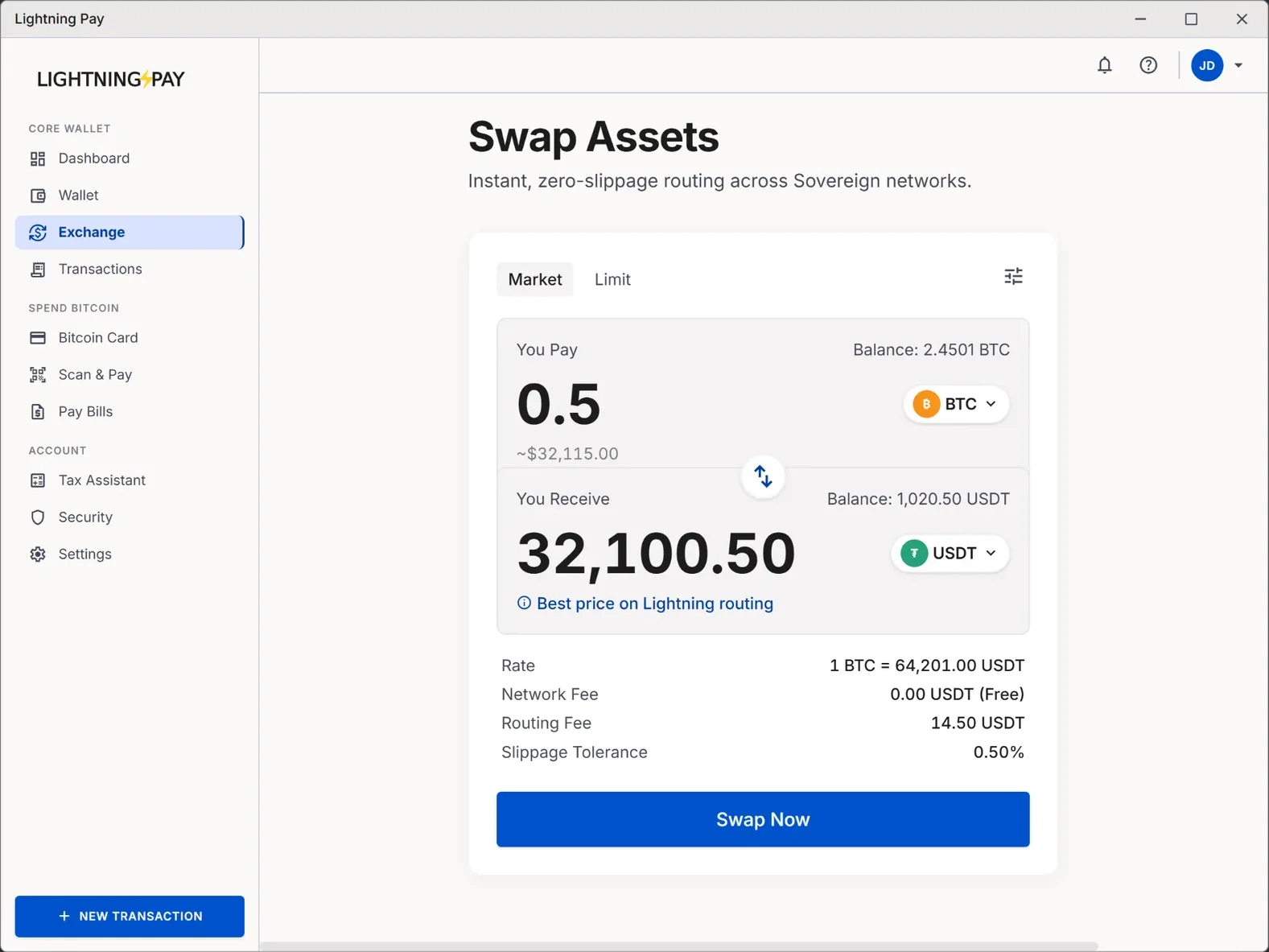
The stablecoin alternative: when you want to de-risk, swap BTC → USDC or USDT in-wallet at 0.1%. The dollar value of your stack is now stable, the assets are still in your non-custodial wallet, and you can swap back to BTC instantly when you want re-entry. Note: swaps are still taxable disposals in most jurisdictions — the Tax Assistant logs them automatically with cost basis attached.
Remittances that arrive in seconds
Stablecoin payroll
Stablecoins, the practical version
Stablecoin support at a glance
- Supported assets
- Bitcoin (BTC), USDC, USDT
- Network
- Lightning Network (sub-second settlement)
- Swap fee
- 0.1% per BTC ↔ stablecoin swap
- Custody
- Non-custodial for all assets
- Same seed phrase
- Yes — one 12-word backup covers BTC + stables
- Transfer fee
- Typically sub-cent on Lightning
- KYC
- None to hold or transfer